Manufacturing Intelligence
Operation planning, “team × time” dependencies, material readiness, quality control and explanations of deviations.
first applied system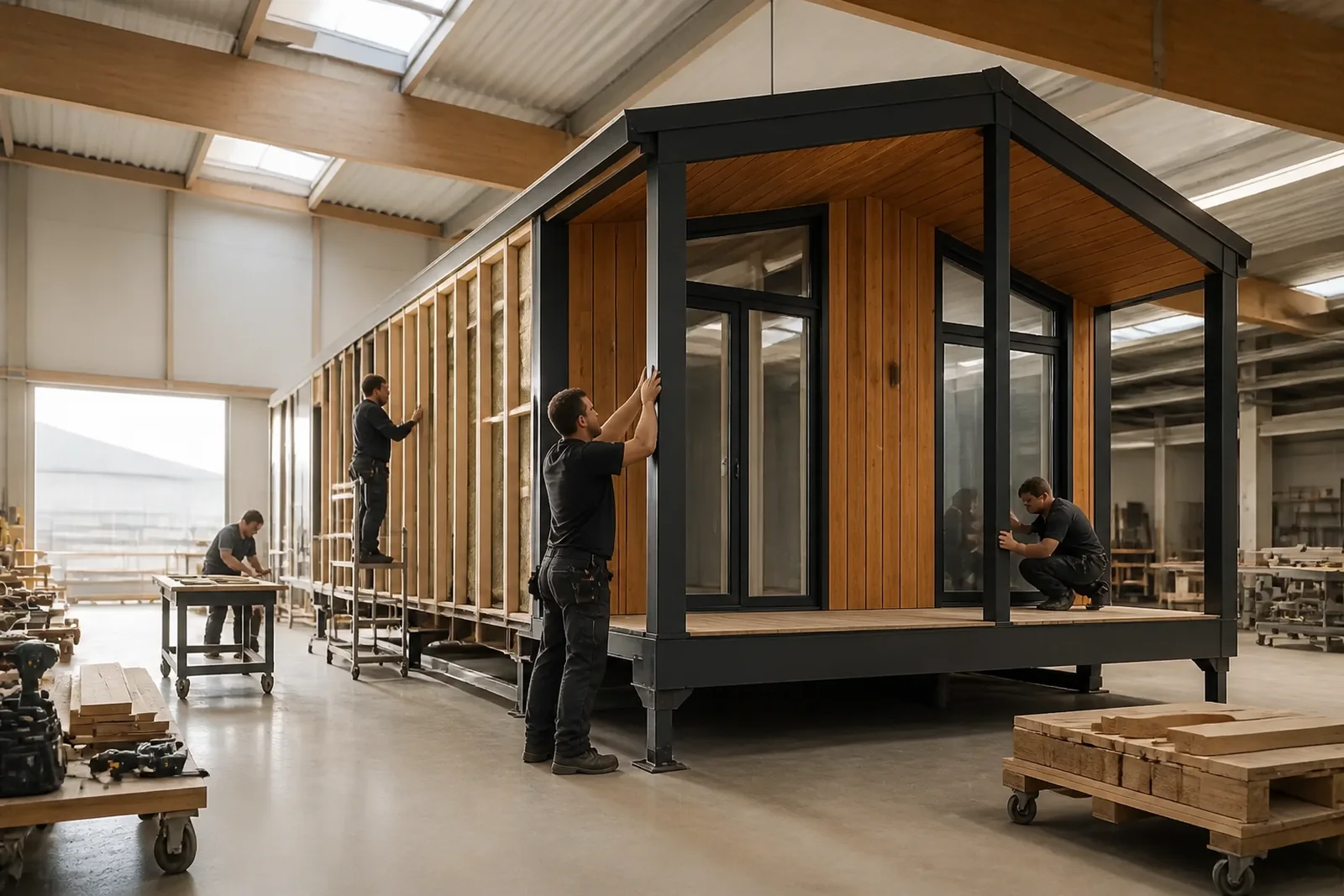
R&D · data · production planning
We research how AI can help the production manager identify risks early and compare options. Reliable data and testing on our own projects come first; expansion comes later.
Mission
General-purpose models handle general knowledge well. But a specific project's schedule, operation dependencies, engineering modes and a particular home's history live in ModulDim's own context.
That is why we are developing a managed AI system, not a single “large model”: domain data, our own quality evaluations, model routing, tools and human decisions where they matter most.
What we need to own
ModulDim does not need to own every model or all computing infrastructure. We need to own our product logic and a way to verify that AI genuinely helps.
Research map
Each direction starts with a measurable task. If a result cannot be verified in a process or product, it is not yet a production AI feature.
Operation planning, “team × time” dependencies, material readiness, quality control and explanations of deviations.
first applied systemTurning a lifestyle scenario, site and constraints into a space configuration with visible trade-offs.
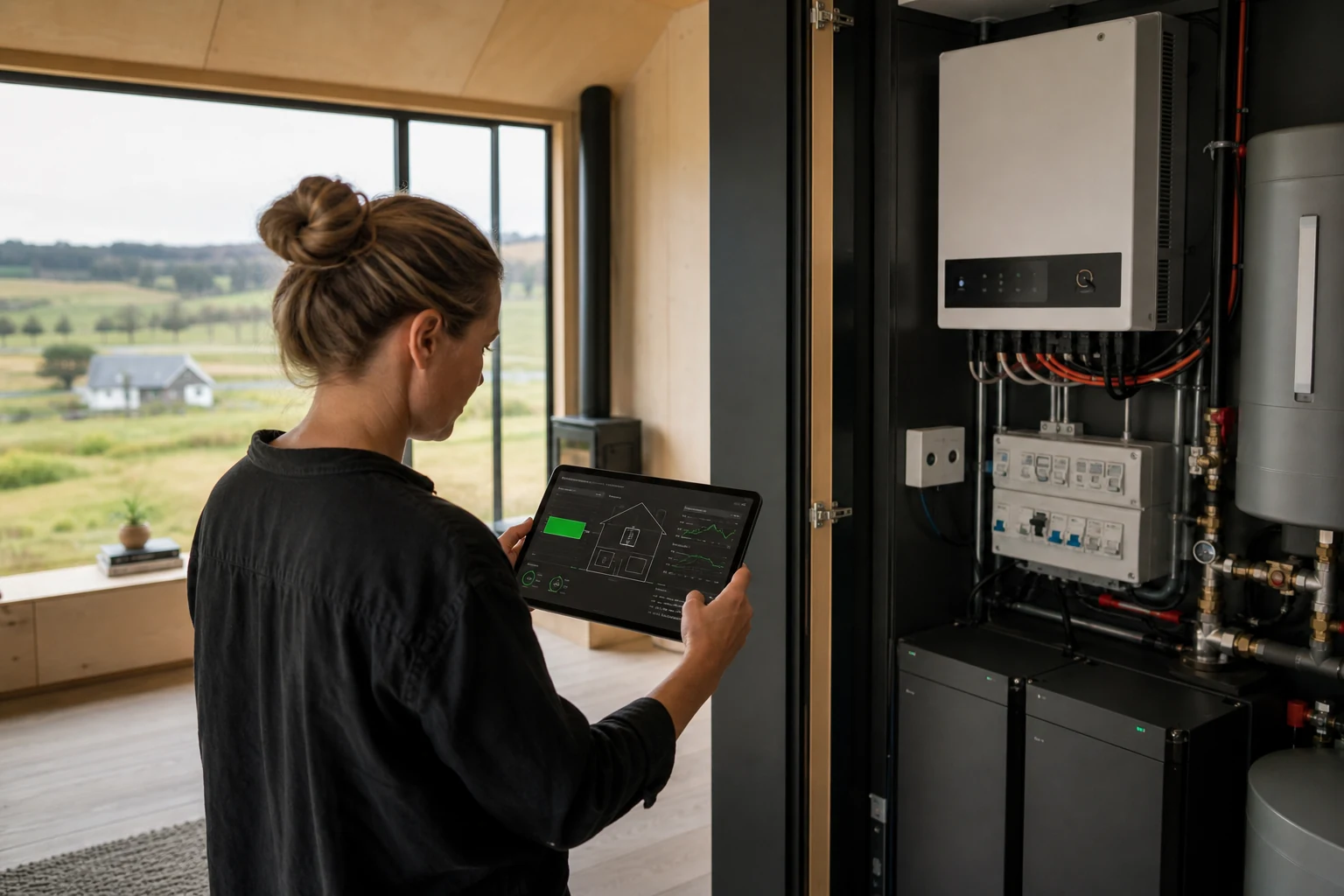
research directionForecasting and coordinating energy, water, climate and security with local scenarios and manual control.
research directionDigital home passports, service diagnostics, maintenance forecasting and knowledge that feeds back into the next product.
research directionAI system
Closed and open models can work side by side. The choice depends on accuracy, privacy, region, speed, cost and availability.
Permissions · memory · decision log · security policies · human approval
Rule: in-house control for critical product intelligence; the external ecosystem for models, compute and specialised infrastructure.
Research protocol
A small autonomous team can move fast if it does not start by training a model. First come the task, a reference baseline and a way to measure results.

One role, one workflow, an expected outcome and a risk boundary.
Reference cases, clear scoring and a blind comparison with the current process.
Anonymised examples and synthetic scenarios created with domain experts.
Context, tools and the most affordable model that meets the required threshold.
Manual QA, a pilot, A/B testing and monitoring of errors, cost, latency and availability.
Complaints, corrections and new edge cases become the next version of evaluations and data.
Initial register
This is a public map of planned evaluations, not a claim of finished models. Statuses will be updated alongside real results.
| ID | Working task | What we measure | Status |
|---|---|---|---|
| EVAL–01 | A “team × time” conflict in the production plan | Conflict recall · false alerts · explanation time | first candidate |
| EVAL–02 | Risk of materials not being ready for an operation | Early detection · cause accuracy · action usefulness | evaluation planned |
| EVAL–03 | An anomaly in a quality checklist | Defect recall · supporting evidence · manual review share | evaluation planned |
| EVAL–04 | Energy and resource scenarios for an autonomous home | Safety · savings · resilience to failures | future direction |
| EVAL–05 | Service diagnostics using the digital passport | Diagnostic path accuracy · time to resolution · explainability | future direction |
Trust by design
An AI feature must be more than accurate. It needs clear permissions, limits on autonomy, an action log and a safe way to shut it down.
 01
Customer and production data are separated from public research and do not automatically become training data.
 02
Sensitive scenarios are reproduced as controlled tasks with a known answer or error.
 03
Decisions affecting safety, money or physical actions have a defined level of human approval.
 04
Context, evaluations and logic are not permanently tied to one provider or model.
Conceptual AI illustrations of working principles, not photographs of deployed systems.
Methodological references
ModulDim's approach is an independent adaptation of these principles to a domain-specific physical product, Ukrainian manufacturing and autonomous living.
An open challenge
Describe the task, available data and how to verify the outcome. We will start with an evaluation, not a model.